
In Conversation with Ande Magoso: Returning to ‘UMbulumakheqe II’: Sound, Story & Image
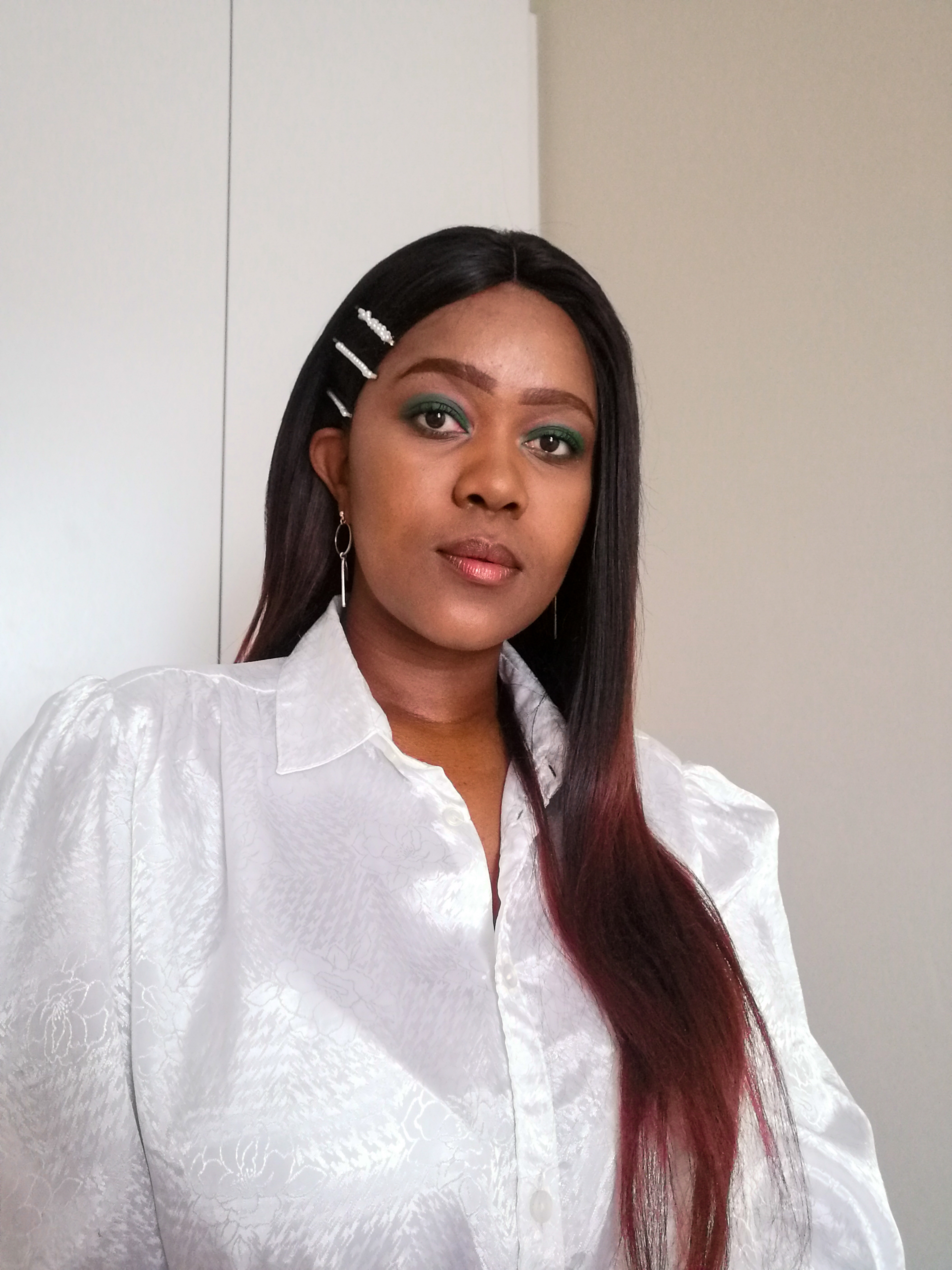

Following our initial 2024 conversation exploring his practice and visual language, artist Ande Magoso returns to CHOSI as he prepares to present UMbulumakheqe II: Sound, Story, Image. Opening this November at the KZNSA Gallery, the multidisciplinary exhibition—conceived alongside Mbali Malimela and featuring Ntobeko Chiliza—merges oral tradition, painting, and sonic landscapes. In this follow-up Q&A, Magoso reflects on the evolution of his hybrid iconography, the dynamics of cultural duality, and what lies ahead in this second chapter of uMbulumakheqe’s journey.
Zimkhitha Xwashu: Please tell us a bit about yourself?
Ande Magoso: My name is Ande Magoso, and I am a visual artist from KwaNgcolosi (Valley of a Thousand Hills), KwaZulu-Natal. My practice explores duality and the relationships between seemingly opposing yet interconnected systems that shape my identity and life experiences. Growing up between Kokstad, Umzimkhulu and KwaNgcolosi, in a Xhosa and Zulu family, has influenced how I think about cultural overlap, belonging, memory and perception. Through painting and drawing, I create hybrid human, goat and sheep figures that allow me to explore these ideas and the complexities of navigating different worlds. The hybrid body becomes a metaphor for inhabiting multiple realities at once.
ZX: Take us back to when your journey into art started.
AM: My earliest memory of falling in love with drawing was when I was six years old, in Grade One. Our teacher asked us to draw ourselves, and I remember being fascinated by the process of recalling my facial features and translating that image onto a piece of paper. I didn’t want to stop drawing. My older brother, Bongumusa, who sketched realistically as a hobby, was also a significant influence. I spent much of my childhood drawing, often retreating into my imagination for ideas.
As a teenager, I began consciously drawing imagery from my nightmares. After high school, I joined skills development programmes at the African Arts Centre and the BAT Centre. Being given a studio and working alongside other artists introduced me to Durban’s art scene and helped me develop my practice professionally. What began as a childhood fascination eventually became my career.
ZX: Your half-human, half-animal figures use goat and sheep to balance your Zulu and Xhosa heritage. How has that idea of duality evolved in your practice since we last spoke?
AM: Duality has evolved from being primarily about the different aspects of my identity to a broader exploration of how seemingly opposing things coexist and influence one another. My Zulu and Xhosa heritage remains an important starting point, but I am increasingly interested in the complexities, contradictions and overlaps that emerge when different cultural identities, beliefs and experiences meet.
The hybrid figures in my work allow me to explore these relationships without necessarily resolving them. I have become more interested in what exists between these seemingly opposing elements, rather than treating them as entirely separate.
ZX: You like leaving space for multiple interpretations of your work. How do you build a story that stays open to different perspectives?
AM: I create works with their own internal logic, but I don’t want to dictate exactly how they should be understood. The figures, environments and relationships in my work come from specific experiences and ideas, but I allow space for viewers to bring their own histories and perspectives into the encounter.
For me, leaving room for interpretation doesn’t mean the work has no meaning. It means that its meaning can extend beyond my own explanation. I want viewers to recognise something familiar while also encountering something they cannot immediately name, allowing them to make connections and discover things for themselves.
ZX: Alongside Mbali Malimela, you introduced UMbulumakheqe in 2024 and now return with UMbulumakheqe II. Who is he in this second chapter, and what should viewers know coming into it?
AM: Our collaboration began in 2024 at Poetry on the Lawn, where I created a live painting of the main character in Mbali’s tale. This developed into our first collaborative exhibition, which presented the story from its beginning to its middle. With UMbulumakheqe II, we continue from there, carrying the story towards its conclusion.
In this chapter, uMbulumakheqe moves through experiences of longing, devastation and hopelessness towards joy and fulfilment. Without revealing too much about his journey, I would encourage viewers to approach the exhibition as more than a straightforward telling of the story.
Although some paintings follow the chronology of the narrative, others communicate ideas and relationships in less explicit ways. Through oral storytelling and visual art, audiences are invited to make connections between the different elements and piece together their own understanding. The story has an ending, but the ways of experiencing and interpreting it remain open.


Comments